Why Your Iron Stays Low (Even When You Eat Well)
2 October 2025 · 9 min read
There's a common belief that iron deficiency anaemia is just a dietary issue. Not eating enough red meat? That must be the cause. But here's the reality: many women face this problem again and again. They increase iron in their diet, maybe take supplements, yet their blood tests barely improve. Frustrating, isn't it?
Let's look at the possible causes first — and then practical steps to actually move the needle.
Possible Causes: Dietary factors
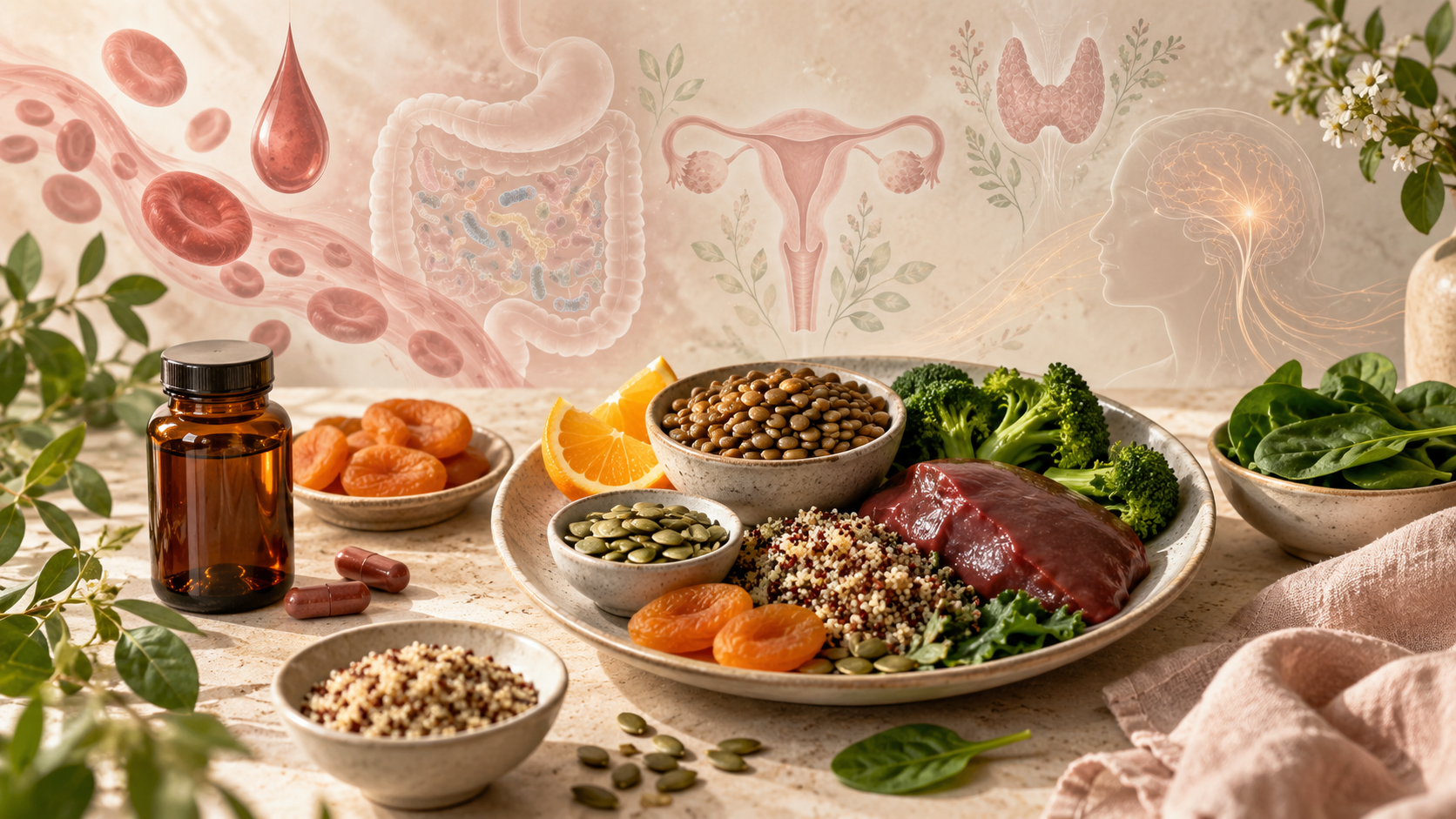
Dietary reasons are the most obvious — and always the first thing to rule out. Quite simply, not enough iron in the diet can cause anaemia. There are two main types of dietary iron:
- Heme iron (animal sources): red meat, liver, poultry, fish. Absorbed efficiently and helps your body absorb non-heme iron too.
- Non-heme iron (plant sources): lentils, chickpeas, beans, tofu, tempeh, spinach, kale, pumpkin seeds, quinoa, broccoli, dried apricots. Valuable, but needs proper preparation and pairing.
A sensible reminder: too much heme iron can backfire, contributing to oxidative stress and upsetting gut balance. Red meat once every week or two is plenty — choose organic, grass-fed where possible. And don't forget vitamin B12. Without B12 (and folate), your body simply cannot build healthy red blood cells, no matter how much iron you eat.
Hormonal health
- Heavy periods are one of the most common causes of low iron in women — each cycle can drain stores faster than they're replaced.
- Thyroid imbalance often worsens heavy bleeding.
- If hormones aren't addressed, iron will keep slipping despite diet and supplements.
Gut health
- Pathogens such as H. pylori, E. coli, Klebsiella, parasites (giardia, hookworm), or SIBO can literally feed on iron and fuel inflammation.
- An inflamed or leaky gut lining reduces absorption — not only of iron but also B12 and other nutrients.
- So you may be eating well, but the iron never gets where it's needed.
Iron vs B12 deficiency: spotting the difference
Both deficiencies can cause anaemia, but symptoms aren't identical. Low iron tends to show as fatigue, pale skin, brittle nails, hair loss, breathlessness, restless legs, and cravings for ice. Low B12 brings fatigue with brain fog, tingling hands or feet, mood changes, memory issues, a sore tongue, and balance problems. Often both are low together, especially when absorption is impaired.
What's considered low?
- Ferritin (iron stores): <30 µg/L often depleted; women usually feel best at 50–100 µg/L.
- Haemoglobin: women <120 g/L (12 g/dL) = anaemia.
- Vitamin B12: <200 pg/mL = deficient; 200–350 pg/mL = grey zone.
- Folate: <4 ng/mL typically low.
What to Do
Correct the diet
- Eat 1–2 iron-rich foods daily — heme in small amounts, plus non-heme from legumes, greens, seeds, and grains.
- Soak legumes and grains for 8–24 hours to reduce phytates and make iron more bioavailable.
- Pair iron with vitamin C: citrus, peppers, berries, broccoli, kale — a squeeze of lemon goes a long way.
- Daily B12 sources: nutritional yeast, seaweed, shiitake mushrooms, liver, fish, chlorella.
- Supportive teas: nettle (rich in iron and vitamin C) and dandelion (supports the liver, which stores iron).
Consider supplements
- Iron bisglycinate — chelated, gentle, well absorbed.
- Ferrous citrate — well absorbed and generally well tolerated.
- Ferrous fumarate or gluconate — well absorbed but may inhibit vitamin E absorption.
- Liquid irons — good for dose flexibility and sensitive digestion.
Take iron with vitamin C, away from dairy, tea, or coffee.
Support hormones
- Yarrow tea — traditionally used to reduce heavy menstrual flow.
- Peppermint tea — soothing and supportive for hormonal balance, especially with PCOS.
- Magnesium — eases PMS and supports progesterone.
- Agnus Castus (Vitex) — supports cycle regularity.
- Seed cycling with flax, pumpkin, sunflower, and sesame seeds across the cycle.
- Cruciferous vegetables to support the liver in metabolising excess oestrogen.
- A low-GI diet to stabilise blood sugar and support hormone health.
Heal the gut
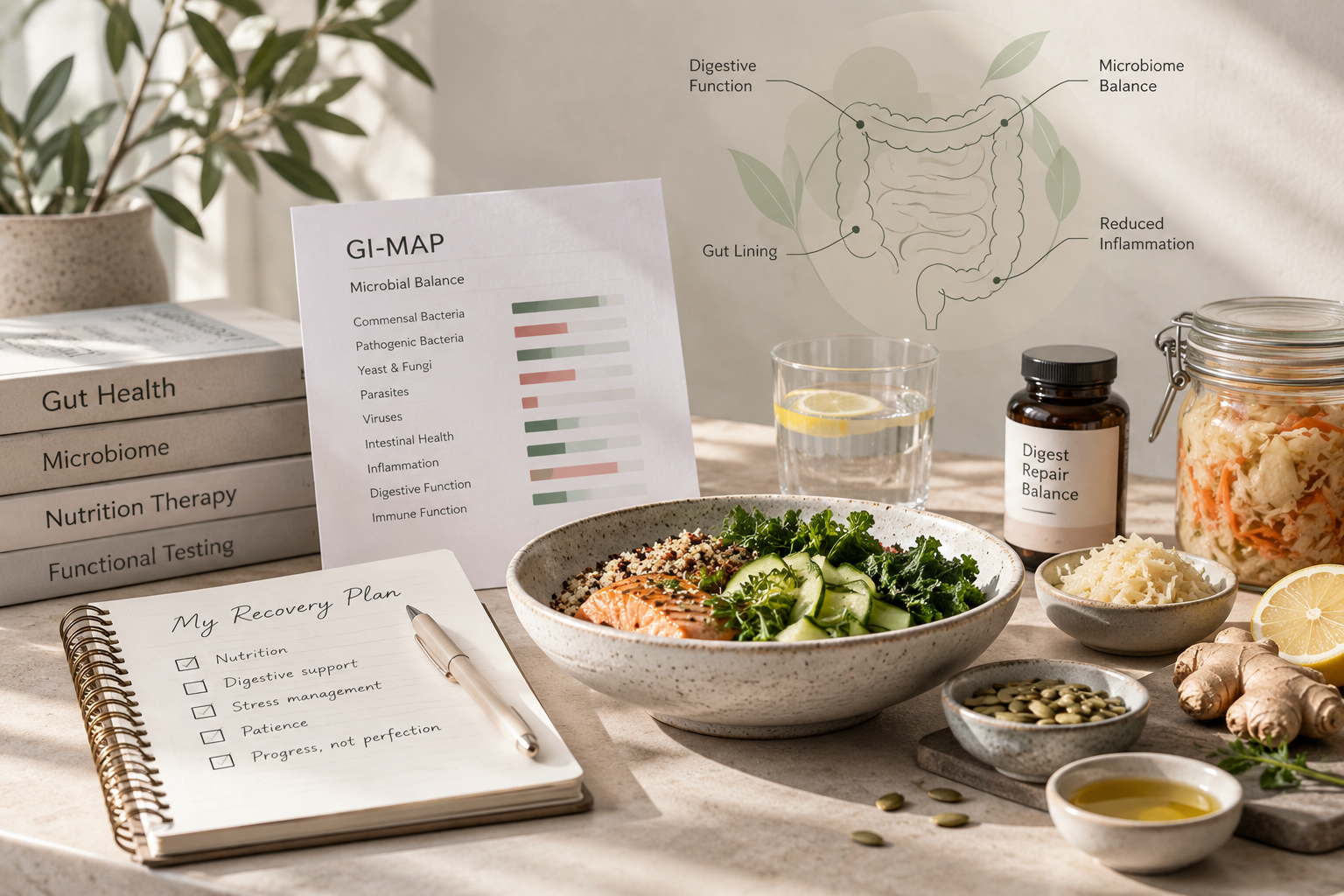
Consider a comprehensive stool analysis with a nutritional therapist to check for pathogens, parasites, or dysbiosis. Remove pathogens if present, then focus on soothing and restoring the gut lining.
Some gentle, natural ways to support gut healing include:
- Liquorice root (DGL) — calms inflammation in the stomach lining.
- Marshmallow root — coats and soothes irritated mucosa.
- Aloe vera juice — reduces gut inflammation and supports healing.
- Slippery elm — forms a protective layer along the gut lining.
- L-glutamine — supports repair of the intestinal wall.
- Probiotics and fermented foods — help restore a balanced microbiome after clearing pathogens.
Reducing gut inflammation and repairing the lining helps iron and B12 absorption return to normal.
Manage stress
Stress disrupts digestion, absorption, and hormone balance. Gentle practices — daily walks, breathwork, prioritised sleep, and steady meals — support your whole system.
The heart of the matter
If your iron isn't improving, it's rarely just about diet. Anaemia is your body's signal that something deeper is out of balance. With the right mix of nutrient-dense food, supportive supplements, hormone care, gut healing, and stress management, you can restore your iron and reclaim your energy. You don't need to push harder or eat more steak — you need to uncover the underlying cause.